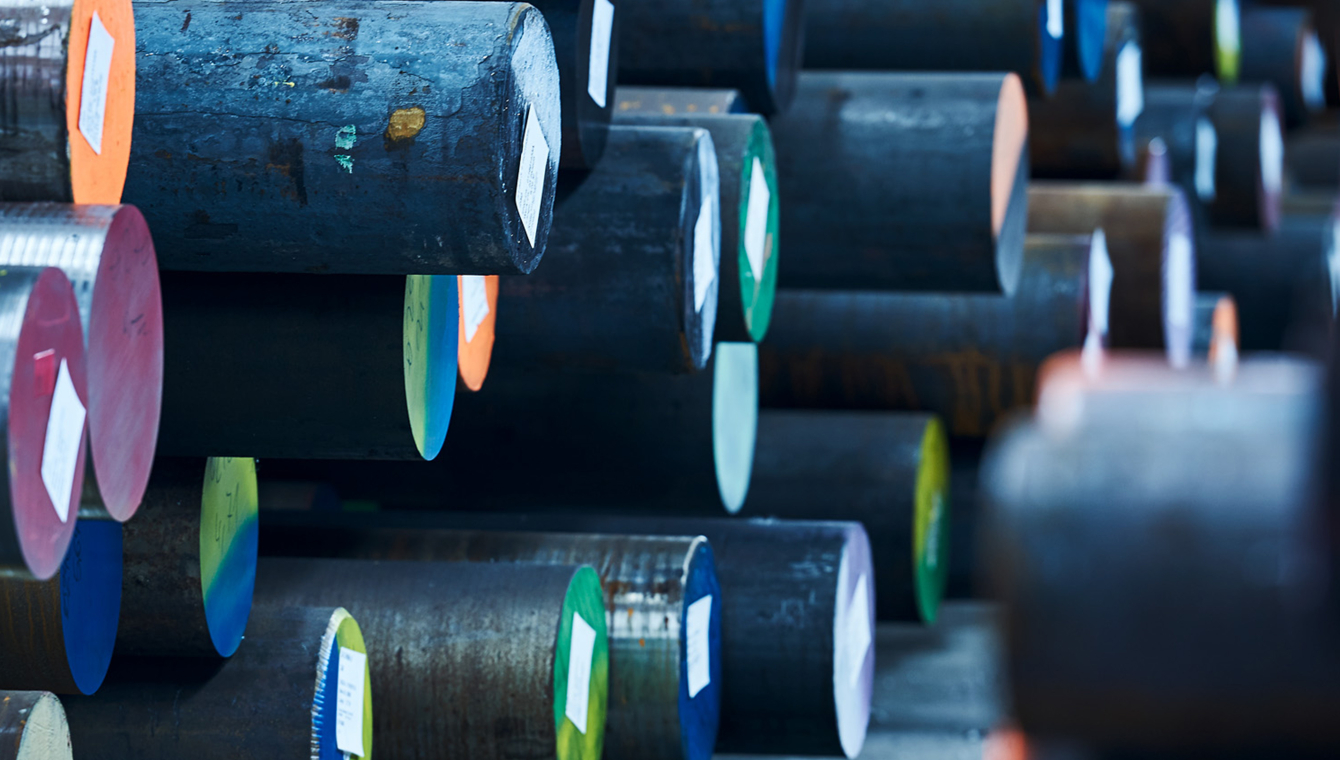
Processing services – Professional, high-precision steel and metal processing
With our modern machinery, we process the products precisely according to your wishes.
Sawing and cutting
We cut steel and metal precisely to length, in Europe's most high-tech cutting and sawing centre.
Learn moreTube laser cutting
Thanks to laser technology, we are able to saw, drill, mill and deburr steel and metal in a single process step.
Learn moreFriction drilling
Using modern equipment, we realise chipless passages in thin-walled profiles.
Learn moreEdge and surface finishing
We deliver metal blanks deburred and free of rust, scale and rolling skin. If required, we can also provide blanks preserved, lasered or barrel finished.
Learn moreWhat is quality steel used for?
Quality steels are used in widely diverse areas.
- Case hardened steel is used for bolts, joints, bushings, pivots, gears, levers, shafts, and much more
- Quench and tempered steel is used for shafts in ship, engine, vehicle and machine tool construction, and in the production of screws
- General structural/construction steels are found in profiles, sheets, shafts, axles, levers, hydraulic pistons, e.g. in metalworking shops, in steel, machine and tool construction, and in structural and civil engineering

What are the properties of quality steel?
In general, quality steel is more formable than basic steel, exhibits higher purity and is suitable for heat treatments such as hot forming.
The material properties differ depending on the composition and thermal treatment.
Case hardened steels
This steel has a relatively low carbon content and is very tough at the core. In contrast, however, the surface is very hard, which makes the external skin of steel particularly wear-resistant and robust. It is highly suited for components that require low core strength.
Quench and tempered steels
In contrast to case hardening steels, quench and tempered steels possess uniform material properties. They have high tensile and fatigue strength and hardness across the entire cross-section, which allows quench and tempered steel to be subjected to high dynamic and static loads.
General steels/structural steels
Steels/structural steels or construction steels have a very high yield strength and are therefore able to withstand permanent mechanical stress. They weld well and are suitable for stress-free annealing (heating to relieve internal stresses).
What is the difference between alloyed and unalloyed quality steel?
Unalloyed quality steel does not require a certain degree of purity and may contain a certain proportion of alloying elements such as nickel, boron or lead. However, it is subject to specifications in terms of toughness, grain size and deformability. Unalloyed quality steel must be both malleable and resistant to brittle fracture.
Depending on the grade, alloyed quality steel must contain a defined concentration of alloying elements as stipulated by the governing standards. This changes its usage properties, such as hardness, breaking strength or heat resistance.
What is the difference between quality steel and stainless steel?
Quality steels are superior to simple basic steels in terms of purity and formability. Stainless steels, however, have an even higher degree of purity because they are melted in a special process and possess a sulphur and phosphorus content below 0.025%. Some stainless steels are classified as high-grade steels.
Visit our online shop!
Visit our online shop to find all the information you need on availability, dimensions and delivery conditions. Once you have registered, you will have constant access to the latest prices and you can purchase your steels and non-ferrous metals directly online.
Continue to shopFurther information about EHG quality steel
Downloads/Brochures
Do you have any questions?
Are you looking for a specific quality or processing service, or are you interested in our services? Contact us today. We deliver solutions.